

EV Fleet Charging in Dubai: Market Growth, Regulations, Infrastructure & What Fleet Operators Must Know
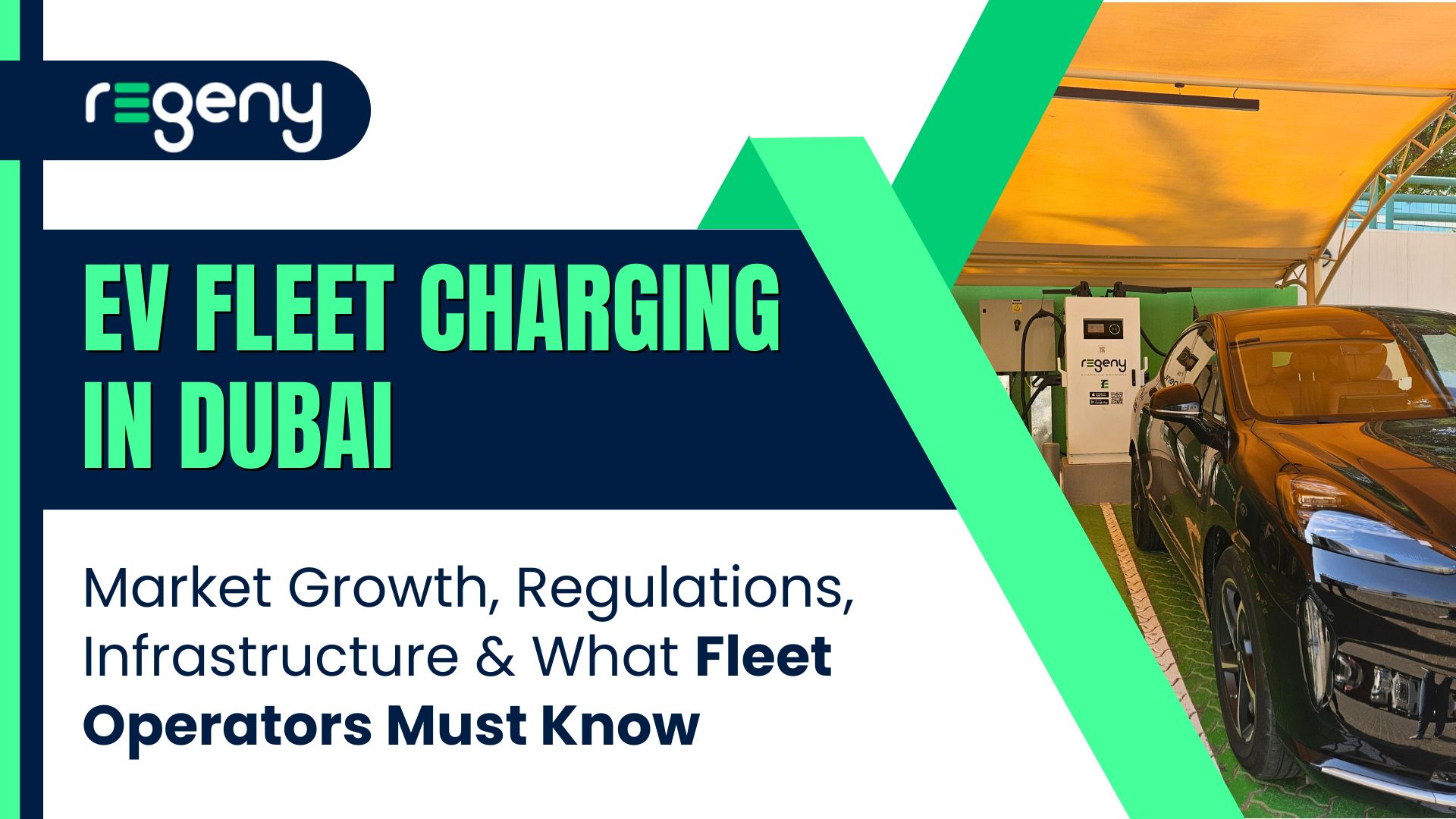
Dubai is fast becoming a regional leader in electric mobility. While private electric vehicle (EV) adoption continues to rise, the strongest momentum is coming from commercial and fleet operators — including taxi fleets, ride-hailing platforms, logistics providers, hospitality groups, and corporate mobility programs.
Fleet electrification is no longer optional. It is being driven by government policy, cost efficiency, sustainability targets, and the rapid expansion of public fast-charging infrastructure across Dubai.
This guide breaks down market growth, regulations, charging infrastructure, challenges, and charging strategies — with a clear focus on what fleet operators in Dubai need to know today.
EV Adoption in Dubai & UAE: Market Context
Electric mobility in the UAE has moved beyond early adoption.
Key market indicators:
- 140,000+ electric and hybrid vehicles currently on UAE roads
- ~24,000 EVs and plug-in hybrids sold in 2024
- EV share of new vehicle sales projected to reach:
- ~15% by 2030
- ~25% by 2035
- Dubai alone accounts for a significant share due to:
- Strong charging infrastructure rollout
- Fleet-focused electrification programs
- Higher urban vehicle utilization
Fleet vehicles typically drive 3–5x more kilometres than private cars, making them the primary driver of charging demand and infrastructure growth.
Government Push for Fleet Electrification in Dubai
Dubai’s EV strategy places a strong emphasis on commercial and fleet electrification as part of its broader sustainability agenda.
Key policy drivers:
- Dubai Clean Energy Strategy 2050
- UAE Net Zero by 2050 commitment
- DEWA’s EV Green Charger initiative
- RTA electrification targets for public transport and taxis
What this means for fleet operators:
- Gradual expectation to integrate EVs into commercial fleets
- Priority access to charging infrastructure for high-utilization fleets
- Alignment of charging rollout with transport hubs, logistics corridors, and business districts
Fleet electrification is increasingly tied to procurement decisions, licensing discussions, and long-term operational planning.
EV Fleet Charging vs Private EV Charging
Fleet charging requirements are fundamentally different from private home charging.
| Aspect | Private EV Charging | Fleet EV Charging |
| Daily usage | Low–medium | High, continuous |
| Downtime tolerance | High | Very low |
| Charging speed | AC sufficient | DC fast / ultra-fast required |
| Location | Home / office | Depots + public hubs |
| Scalability | Limited | Critical |
For fleets, charging uptime directly impacts revenue. A poorly planned charging strategy leads to vehicle idle time, operational delays, and higher costs.
EV Fleet Charging Models in Dubai
1. Depot-Based Charging
Best suited for:
- Fixed-route fleets
- Overnight vehicle parking
- Predictable duty cycles
Limitations:
- High upfront infrastructure cost
- Grid capacity constraints
- Limited flexibility for peak demand
2. Public DC Fast Charging
Essential for:
- Taxis and ride-hailing fleets
- Logistics and delivery vehicles
- High-utilization commercial fleets
Advantages:
- No depot dependency
- Fast turnaround times
- Flexible city-wide operations
3. Hybrid Charging Model (Most Common)
Combines:
- Overnight depot charging
- Daytime opportunity charging at public DC fast chargers
This model is increasingly preferred in Dubai due to urban density, traffic patterns, and fleet duty cycles.
Importance of DC Fast Charging for Fleets
Charging speed directly impacts fleet efficiency.
Typical charging times:
- AC charging (7–22 kW): 6–10 hours
- DC fast charging (50 kW): ~60 minutes
- High-power DC (120–160 kW): 15–25 minutes
For commercial fleets, high-power DC fast charging is not a luxury — it is a requirement.
Key Challenges Facing EV Fleet Operators
1. Charging Availability
Limited access to fast chargers during peak hours can delay operations.
2. Downtime & Revenue Loss
Every hour a vehicle waits to charge is lost income.
3. Range Anxiety Under Commercial Load
Heavy payloads, AC usage, and stop-and-go driving reduce real-world range.
4. Infrastructure Scalability
Fleet growth requires charging networks that scale without major CAPEX shocks.
Why Charging Location Matters for Fleets
Strategic charger placement is critical.
High-impact locations in Dubai include:
- Airports and aviation zones
- Business districts and free zones
- Hotels and hospitality clusters
- Logistics corridors and industrial areas
- Urban transport hubs
Well-located fast chargers enable opportunity charging, reducing the need for oversized depots.
Role of Public Charging Networks in Fleet Electrification
Public DC fast-charging networks play a central role in Dubai’s EV fleet ecosystem.
They allow fleet operators to:
- Reduce upfront infrastructure investment
- Scale fleets faster
- Maintain high vehicle utilization
- Operate across multiple zones without routing constraints
As fleet adoption grows, reliable public charging becomes as critical as fuel stations once were.
How Regeny Supports EV Fleet Charging in Dubai
Regeny is developing a fleet-ready public EV charging network across Dubai, focused on:
- High-power DC fast charging
- Strategically selected commercial locations
- Fleet-friendly uptime and access
- Reduced dependency on private depots
By enabling fast, reliable, and scalable charging, Regeny supports fleet operators transitioning to electric mobility without operational disruption.
What Fleet Operators Should Do Next
Fleet operators planning EV adoption should:
- Audit daily routes, dwell time, and charging windows
- Combine depot and public charging strategies
- Prioritize DC fast-charging access over slow AC expansion
- Partner with public charging networks early
- Plan charging infrastructure alongside fleet growth, not after
Early movers gain cost advantages, operational stability, and regulatory readiness.
Conclusion
EV fleet charging infrastructure is the backbone of Dubai’s electric mobility transition.
As adoption accelerates, charging strategy will define fleet success. Operators who act early — choosing the right charging mix, locations, and partners — will secure long-term efficiency, compliance, and competitive advantage in Dubai’s rapidly electrifying transport ecosystem.